Kevin Haskins needs no introduction. This year the legendary drummer for Bauhaus, Love and Rockets, and Tones on Tail has reunited with former bandmate Daniel Ash (vocals and guitar) and his daughter Diva (bass) to form the supergroup Poptone — referencing the Public Image Limited song "Poptones" — who will be performing a career retrospective of his bands' songs.
For many this is a dream show, as Tones on Tail hasn't performed since the early '80s. I remember listening to "Rain" and "Lions" while languidly laying in the folded-down backseat of my 1982 Dodge Aries woody station wagon, staring out into a 2 a.m. sky through the rear windows and writing in my composition notebook all the lush poetries that come from the nocturnal stirrings of youth. Let us not forget the afternoon bike rides while singing to the Love and Rockets album Express and glimmering on the inside with verve and a sense of mystique.
I was curious to know more about this long-awaited resurgence from Kevin Haskins, as I always sort of viewed him as a wallflower in terms of his other more vociferous bandmates from the past. A quick and humble interview prior to their Regency Ballroom show in San Francisco is what I got from Mr. Haskins, and I couldn't be more pleased to experience this sonic rarity live.
Poptone
I read in different interviews that Daniel Ash had a revelation in the early hours of morning about how he wanted to do live shows again after a decade in hiatus. What was your reaction when he wanted to do Tones on Tail again? To me, the Tones on Tail fans I know have been dying to see you tour once again and always wondered why it didn't happen sooner.
Basically [Daniel Ash] wanted to play songs that he had written and sang on, so that really formed the set list. However, the majority of songs are TOT. I am very pleased that we are playing predominantly TOT songs. I know from talking to people I bump into at shows that they have been anticipating hearing Tones on Tail music live for a long time. I really love the music of TOT and it's very exciting and fulfilling playing those songs again.
Tones on Tail was such an incandescent and dynamic project. It's still so evocative and fresh today. Why was it so short-lived and close-kept back when you first started? I know you only toured Europe and the U.S. once.
It was down to musical differences for the most part.
The Poptone tour seems very well received so far! The footage I've seen looks like it's a really well-executed show and there has been so much excitement buzzing about it. How does it feel performing these Tones on Tail songs live after 3 decades?
It's a great deal of fun and I'm happy that people who were either too young, or missed seeing our various bands, get to hear the songs live.
What is [original Tones on Tail bassist] Glenn Campling up to these days? Why was he not interested in resurrecting these songs? How did your daughter get involved in the project? I know she was in Blackblack.
I'm not sure what Glenn is up to. I think that he's working as a graphic artist. He designed our current Tones on Tail shirts, which I think look fantastic. We didn't approach Glenn or David J as it felt more appropriate to have a neutral bass player. I couldn't really picture either of them playing each other's basslines. Diva also brings a different dynamic to the table, which is fresh and exciting.
Tones on Tail: Glenn Campling, Daniel Ash, Kevin Haskins
It must be a truly unique experience playing these career-defining songs with your daughter. You must get along very well! What's the dynamic like?
It's quite surreal at times, glancing to my right and seeing her play on stage with me! We get along really well and share similar interests. She has a beautiful old soul and inspires me almost every day.
Returning to your older material, how does it feel in today's music scene? Does it feel like the "scene" used to be better years ago? Are there any newer acts you are into these days?
Thankfully our music feels very fresh and relevant still. I'm really into our current support band called Pow!
Love and Rockets
What do you like to do in your off time? What does a day in the life of Kevin Haskins look like?
It depends what I'm doing career-wise. Poptone has completely absorbed all my time for the past three months. It's incredible the amount of work it takes, especially as we're very hands-on.
Has there ever been a moment when you have been out in public and one of your songs from your previous projects comes on and it becomes a surreal moment for you?
Not really, although [I was] surprised to hear our songs in Urban Outfitters.
You've been composing for film and video games for quite some time now, since 1998. Are you working on any projects right now?
I placed the composing on the back burner for the last two years to work on my coffee table book. It's coming out in October and is called Bauhaus Undead. It's a lot of photos, drawings, writings from the band, and assorted memorabilia. The content is exceptional and unique. I'm very excited that it's finally being published! It will be available on Cleopatra Records, Amazon, and selected book stores.
It seems like every major city in the U.S. is suffering from gentrification or a homogenization in terms of the arts and subculture. What is your take on the current scene/mood in L.A. these days?
Not happy about the current urbanization of Hollywood.
What are your favorite songs to revisit on this tour?
Mainly the Tones on Tail material because it's so eclectic and unique.
I've read that Bauhaus and the like didn't set out to make necessarily "goth" music, but it just sort of placed in that category. How does it feel to be a part of so many people's romantic memories of "goth" music?
It doesn't really concern me as to which category we are placed in. I feel blessed to have had and to continue having such an incredible career. I feel truly blessed and grateful every day.
A young Kevin and Daniel in the inimitable Bauhaus
Poptone is currently on tour! Make sure you get out there to see them!
Swans are looking to see where the river takes them. This year’s LP release, The Glowing Man, was the third and final epoch of an ever-evolving, coincidental trilogy summoning cathartic revelations: visions of illuminated brutalities felt from enigmatic vibrations; elevations in instrumentation between worlds above, and worlds below. It's sonically pummeling and soothing, like bitter medicine. This manifestation of Swans—at the moment Norman Westberg, Kristof Hahn, Phil Puleo, Christopher Pravdica, Thor Harris and Michael Gira—invokes images of the languid finger of man trapped in his corporeal self, lifting up and over to a god eager for connection.
Swans’ main conduit, M. Gira, has written: "I chose the five people with whom to work that I believe would most ably provide a sense of surprise, and even uncertainty, while simultaneously embodying the strength and confidence to ride the river of intention that flows from the heart of the sound wherever it would lead us—and what's the intention? LOVE." [1] Where does this river flow? Gira doesn't know where it will go, and isn't worried about it, and that's part of the point. On a Friday morning, we rang him up and spoke to him over Earl Gray tea. We were hoping he was wearing his cowboy hat, but we didn't ask.
SD: You just finished the East coast and South American portions of your tour. How were those tours different for you?
MG: Well, typically, after we start touring— after not having toured for awhile, I guess for a year (maybe under a year)— it’s very tentative, at first. It seems to go over okay. It’s just for the first couple of weeks—it’s just panic—and trying to find the way into the thing, and how to make it breathe and live. So, the first couple of weeks of the U.S. tour were like that, and gradually it kind of reached its strength. Then, we went to South America and we played, and we were in fairly good form, and the audiences were spectacular. They went wild. The response was really ideal.They received the music in an unfiltered and uncynical way. It was a true experience.
SD: Maybe there are more inhibitions in U.S. Audiences?
MG: In the U.S. and Europe they are more saturated with the media, I think. Probably. The whole thing about the internet, and everything, is about ersatz experience. Fake, unreal. It’s like, “second hand.” I’ve been obsessed with that subject. I was in art school in about 1978 and noticed the bane of modern existence is media. I’m sucked into it just like everyone else. It’s just trying to find out what is actually real, and what has been sort of implanted in your mind SD: It’s almost comparable to Plato’s Allegory of the Cave: believing the shadows, or not.
MG: Oh yeah, that’s a whole other philosophical question. In Zen Buddhism, you look at your mind as if it’s this screen, as opposed to the actual core of your consciousness, or your essential being — the mind being the shadows. It’s kind of an interesting schism as to how you view your own existence.
SD: You mention buddhism; it almost reflects in your music: you are sort of in-between on this yin and yang—between divinity and this sack of meat that we humans are encased in.
MG: Hahaha! Thats kind of a high falutin’ statement!
SD: So how did you round up your current collection of artists you're working with now? How did you get this band together?
MG: When I decided to reconvene Swans, I wrote a long list of people whom thought I could work with, and crossed off many, for no other reason than maybe the gestalt wouldn't be correct, and ended up with a list of the five other gentlemen besides myself. We went into the studio without having rehearsed at all. I had a bunch of songs, and we started playing in the studio for 12 hours for each song. Gradually they transformed into something Swans-like in many cases, and at the end of the day, we would record. That’s how we got the basic performances for those songs. I view that first record, To be Kind, as a transitional record from what I was doing with Angels of Light. That’s how I ended up with these guys—felicitous that it worked out at all. I’ve worked with all of them in the past at some point before in some capacity, but as a group; it did not exist before.
SD: Were you thinking at the time that there was some sort of "current" taking you in this direction? What was that experience like?
MG: At first it was just sort of the anxiety–ridden environment of the studio. There is always the “time is money” thing, and you got to get things done. Once we started touring, we played songs that were pretty much finished, and some old songs. We were playing that for about six months or so. It just seemed false, and then we started exploding things, tearing them apart, and tried to make things happen in the moment. That is when this group sort of “came into being”—when we realized we were kind of one body that moved with the sound as a whole—and we didn't have to constrict ourselves to specific scriptures. It’s kind of difficult to describe how it works. That’s when I realized this was a really great group, as opposed to six musicians trying to play or recite songs.
SD: You've created this wall of sound and vibration that is incomparable to anyone else. The Glowing Man seems to be garnering these feelings of catharsis—an unnerving feeling—yet hypnotic. When I first listened, it reminded me of when I was swimming in the ocean, and I was taken under by a pretty strong undertow. I was starting to panic underwater, and I was thrashing and fighting with this force. But then, all of a sudden, this total calmness and peace came over me, and I thought: “well, if I’m going to die here and now, this will be just fine.” Have you noticed other listeners almost resisting at first, only to completely succumb, and be released into some sort of heightened state?
MG: That should be in a movie! That’s how we feel, too, actually, when we perform. That’s great. When the music works best, it becomes an act of letting go, rather than control. That state of mind you talk about is actually the ideal state of mind to employ in your daily life. But, it’s a tougher course. Unless you’re a spiritual master, it’s impossible to do. I think that awareness of the proximity—the gnawing proximity of death—is really a very healthy thing. It puts things in a very urgent perspective.
SD: Has that been a theme in your music over the years?
MG: No, not really. There are many subjects I’ve touched upon over the years. I’m just talking about death in a personal way. If you keep in mind I—or we, or any of us—could have a heart attack right now, and could be brain dead for life. It actually happened to a friend of mine. He’s not brain dead, but his mind has been completely altered. I was just talking to him the day before it happened, and now he is in an institution for the rest of his life.
SD: The turn of events that can happen...
MG: Yes things just go [snaps fingers] like that so if you keep that in mind it keeps things in focus a little better.
SD: Living life more authentically, more presently. Speaking about that, how do you prepare for these shows? You're channeling such immense energy. What is going through your mind? MG: Well, I'm certainly not reading the Kabbalah before! No, but really, it’s just a routine. You wake up in the tour bus, you do whatever, you try to find some coffee, maybe find a place to shower, then you load in the gear, sound check, then you hang out and twitch for a couple of hours, and then you walk on stage and you play the show, and you pack out the gear, and you collapse, and you do it all over again. You just get into this flow of it. The moment is when you are on stage, and it’s a kind of crucible, and sometimes it works and sometimes it doesn’t, but you just put everything you have into it. SD: I'm wondering, for you, if there is anxiety building before, or is it calm before the storm?
MG: No, I don't ever feel calm. I don't ever try to think about it. I just do it.
SD: You created the album art for The Glowing Man. To me it has this sort of Rune-like symbolism to it.
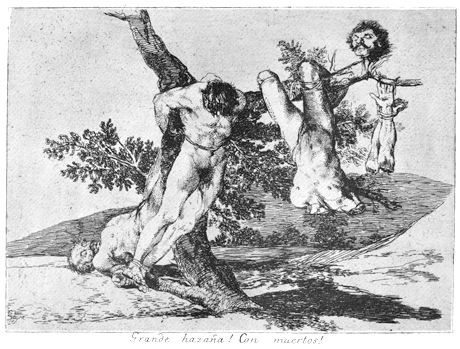
MG: I've had this notion of using characters from other languages as icons on each panel on the LP and digi-pack CD version, and each character from each language would be on each panel. It was going to be “glowing man” or "world" in Japanese, Sanskrit, Hebrew, a few other things, and I just started to look at it and saw how "New–Agey" it looked. It looked like Orientalism or something, and I was appalled—and I said, “fuck it,” and threw it out. There was a deadline. So, instead, I just drew these characters myself. I realized later it sort of looks like The Disasters of War by Goya a little bit—body parts hanging from the trees. I also saw a parallel afterwards to Bruce Nauman, who’s a great conceptual artist and sculptor, who made this piece calledFrom Hand to Mouth. It's a sculpture of a cast of a mouth, leading down to an arm. It’s just that—not the rest of his body. It’s kind of a wonderful piece. The cover art is up for interpretation.
The Glowing Man
SD: Swans are sometimes associated with the no-wave scene that was going on in the 1980's. Can you tell me a little more about what was going on for you then?
MG: We came at the tail-end of it. We jettisoned onto the tail-end of punk and no- wave. Oh, that’s only a minor historical point; the groups that were associated with no wave (if I can fucking remember them right now) are Mars, Teenage Jesus, The Contortions, Theoretical Girls. Oh god, they were pretty much all disbanded by the time both I and my friends from Sonic Youth got to New York or formed a band. We kind of came out of that period. Certainly both of us informed on the aesthetic of no wave. I didn't want to sound like someone else. I just was emboldened by the idea of not really playing your instrument in any conventional sense—I certainly couldn't at the time—but still forging something. I was more inclined towards very regimented rhythms, like most of the no -wave stuff would have been, with the exception of The Contortions. It was a gate that opened up just to move forward.
SD: You were reacting to the punk scene.
MG: Yeah, punk at that time, by 1980, was just a total cliché already. The attitude of punk, the emotion—violent emotion—was really attractive to me. But the idea of playing the chord progressions was just kind of stupid to me, so I never did that. Punk had a uniform and hardcore was even worse. It was like a bunch of high school jocks that found their soundtrack, you know? To me, it was not very interesting.
SD: Speaking about violence, per se, it's rumored back in the day that you would lock the people into the show, and you were also noted to turn the A/C off while playing live. What’s the story behind this?
MG: Well, we got tired of people fleeing [laughs]. People hadn't heard anything like it before, so it was definitely a sort of undeniable presence in the room. So, I guess, a couple times we locked the doors and we turned off the lights, so it was completely dark (laughing again). Listening to Swans is a commitment. That wasn't a habitual thing. The A/C just really has to do with my voice. When the A/C fans are blowing on the stage, your vocal chords instantly freeze up. Plus, I also feel like I'm in a bank or something. I was heartened to read that Aretha Franklin has the same requirement—she needed to turn off the A/C on stage. Not that I’m Aretha Franklin; although I wish I was. Yeah, I don't mind the heat. It can be very extreme at times, where you almost pass out, but it kind of adds to the whole feel of what’s going on I guess. It's not supposed to be nefarious or about some sadistic attitude towards the crowd. It’s simply just a by product of wanting my voice to work. I quite enjoy the sweating and the expulsion.
SD: I can’t wait to see the San Francisco show- for me, I would imagine it would be like this sweat lodge, being ritually cleansed, or exorcised. Maybe that's what you're doing to the audience.
MG: Yes, I feel like it is. But, it’s also happening to us, too. Yeah, maybe I think all those kinds of descriptions are somewhat accurate, but they're a bit romantic. It’s just a job really. HAHAHAH! [totally cracks up]. It’s like working in construction.
SD: I know in your musical career, you have had hard times. Have you felt like, "Fuck music! Fuck being an artist! I'm just going to be a fucking banker, or a real estate agent?"
MG: Ha! I guess I would have been a lawyer. No, I don’t even have a choice. This is who I am, this is what I do. This is what I have known. I'm an artist—and it's not with a capital “A”—it’s just what I have to do. It's through digital means, it's through writing. It’s through music that I feel like, “I have to do that,” or I feel like I’m not actually existing. Finding your calling is a primary realization. So, that’s just how it is.
SD: Especially the stuff you're putting out. It can't be avoided. It’s almost at this point borderline mysticism—spiritual in a sense.
MG: There’s a lot of spiritual aspirations involved, but again, I wouldn't want to overemphasize that. It’s rock music, for god’s sake! I would suggest people should experience it, and if they like it, “fine,” and if they don’t, “bye.”
SD:Take it or leave it; this is what I do?
MG: There’s always been that attitude. There was a time in the late 80s that the lure of success—so-called success—put us on a major label and I made some compromises which I thoroughly regret. But in my defense, I did it out of an intense fear of continuing to work construction for the rest of my life. It’s just a trade-off. I mean, there are great commercial bands (i.e., The Beatles, The Rolling Stones). I realized, after that experience—“that’s not me, I can’t do it”—and I went back to following imagination and intuition, and let the consequences fall where they may.~~
Swans plan to tour for at least another year and half with this crew. Where will they go after this? Gira speculates " this band as we know it now will not continue to exist. After this tour it will be a revolving cast of contributors. Some of them will be the same. Some of them will won't be. We can't have a set band. Not logistically, financially, emotionally. I will not go back to that mode. It is necessary to change it up".~ If you want to continue on this ride with Swans and their organic un-foldings follow them here. Also check out there show on 9/3 at the The Regency Ballroom with Baby Dee. Get sonically pummeled. Let it take you there.