Showing posts with label brutality. Show all posts

Thursday, July 13, 2017

Pharmakon and the culmination of Contact: The Elbo 7/13 with Chasms and V.E.X.

    Shrieks, shrills and trills done vocally and synth-etically inspire a quixotic nausea of the existential kind in the ten year concept that is Pharmakon. Creating this music installation from NYC, Margaret Chardiet’s solo project has released the output titled “Contact” in which she examines “what it takes to be human” in dabbling with trance states and primal vibrations. In her words she explains “Despite all our rambling rejections, we cannot transcend all of our instincts-just animals lost in a confused dream…”.
     One of her fans on Bandcamp.com describes it as “This album sounds exactly as (the cover art) looks like. It makes you feel disgusting. It’s very, very good”. Taking a look at the album cover photo of pink, grubby, slimy fingers, mushing hair and the glistening flesh of a face is a reminder that we are all existing inside a sack of meat, a sort of biological nihilism. Yet, if we accept “this tiny sliver of time it opens us to revel in it, to make CONTACT”. On first listen, I felt ill. I turned the song "Nakedness of Need" off, only to be left with a sense of intrigue. 


     If you are in the mood for the intensity of say, Swans in their Filth-era paired with the dark unpredictability that Nurse with Wound has mastered with bleak relentless synth incisions and human cries from the depths of uncomfortable darkness this is for you.  I would recommend coming to indulge in this show if you want to  trudge in the fear and the glimmer of the human experience.  It might make you sick in a way, but doesn’t life? In the word’s of Chardiet,  “When the mind uses the body in order to transcend- escape it!” 

Also the Chasms duo visits their home town of SF after a move to LA to perform their heroine-gaze-y collaboration as well as Oakland’s own masked demons of light V.E.X., doing their dual synth queer-core weirdness that hopefully involves some improv sax.


Be there and be moved…. 


Saturday, February 4, 2017

To Feel it One More Time: Disorder bids us Farewell

Named after a Joy Division song, Disorder was created seven years ago to showcase current basement-born darkwave/post-punk fusions, including bands like High Functioning Flesh, Black Marble, and Void Vision; even the font of the Disorder fliers, with 3-D effects and primary colors, has all the cool elements of some New Order album art. But now Nickie Tilsner, Disorder's founder and resident DJ, is leaving S.F. for more northern territories. 


To say goodbye to Disorder, there is a final show at the Night Light on Friday, February 10, featuring guest DJs Zlaya (Body Rapture/Wire Trap) and Hether Fortune (Wax Idols) with Nickie downstairs. Upstairs features live performances by All Your Sisters, Russell E.L. Butler, Zanna Nera, and Lyfers, with DJ sets from Zer0w0lf.

Before Nickie makes the move to Portland in June, I had to find out more about the history of Disorder and how it all came together. The Upper Haight was eerily empty that early afternoon. I found myself missing the bundles of crusty punks eating pizza and asking for change alongside their hankerchiefed hobo dogs. No one asked if I wanted to buy any weed, let alone did I smell any of its fragrance wafting along the air as I walked to the cafe. There were no wanderers, no listless beatniks, no overjoyous hippies, no studious anarchists. But discussing San Francisco's artistic erosion and dissipation of diversity is no new topic of rage and anger. At this point it's rather a burned-out topic, a disillusionment and a disappointment. So it comes as no surprise when S.F. loses another artistic inspiration in search of greener (and hopefully cheaper) pastures. 

Sitting in the window seat at a cafe on Haight and Masonic, and over the loud whir of a juicer, Nickie and I discussed the beginnings, the tribulations, the music, and our badass little community by the bay. 

So February 10th is the last one. What are your feelings on all this?

Oh god, it's so weird, I have so many. It's funny, the way this show came about. I wasn't going to do a farewell show. I had been done with Disorder for awhile. School got kind of crazy, so I just put it on hold. But after Ghost Ship I was reaching out to a lot of people and I ran into Jon Lady (Third Shadow/Lyfers) and he and I have always wanted to collaborate together. So after running into him a few weeks after the fire, we decided that we had to do something creative and positive. 'So let's put together a show,' we decided. There are so many different facets to what this show is about. It's about the end of 2016 and what a shit show that was. It's the weekend of Valentine's Day and I'm leaving, so we are celebrating our love of Oakland. It's heavy, but it's really positive, too. 


It's going to be a very energetically charged night. So many great players! So, for the record, when did you start Disorder?

It actually started in 2010, the last weekend of September, at Bar 355 in Oakland and I started it with no experience. I didn't know how to DJ, I didn't know how to promote. I didn't know how to book. I just knew I loved music and I had a good record collection and there were no goth nights in Oakland. So, I just did it, having never DJ'd before. 

That seems intimidating! Did you only play vinyl?

At first! I would go to Shutter all the time, which was kind of like my favorite night ever, even though I would have to leave before midnight because of BART. So I thought I would start something for all the goth kids in Oakland. So I brought out all my records and played them and It was super fun. I started out doing traditional goth and post-punk and darkwave, and then it kind of became a little more electronic over time. Doing Disorder at 355 didn't last long because I didn't know how to promote and then one night after the show all of my records were stolen. Some of these LP's were things that I have had since I was 13. Like I had a Pink Turns Blue album that was stolen… ahhhhhh [sigh of disdain]. It was pretty heartbreaking, so I stopped for awhile. 

Oh no! Did you cry?!

Oh … I BROKE shit. Then I cried. Then I broke shit. It was awful. So then I started working from the laptop, learned some tricks, moved to the city and realized I loved the Knockout (S.F. bar/venue) and I thought, 'I wonder if they'll let us do something there!' So I wrote them and they said yes and they gave me a monthly. This is kind of how I've done this thing from the start. 

Putting it out there and waiting to see what catches on.

Yes! Being a real-ass person! Being genuine! And people seem to respond really well to that. 

That seems like an ideal way of getting things done! So what were you spinning in the early days?

Pink Turns Blue, The Sound, Joy Division, New Order. Kind of the basic stuff that people like to dance to. Sisters of Mercy, Siouxsie. As I continued doing monthlies and gaining more musical knowledge about what was going on out here in S.F. and out there (East Bay), styles changed, skills changed, and that's where I am at now. 


It was kind of perfect timing then when bands like All Your Sisters started coming up. 

Yes, perfect timing. 

How long were you at the Knockout for? Did you do guest appearances at other venues?

I was at the Knockout for a few years. They had this clause that if I had a monthly night there, I would have to book bands, and I had never booked bands. So I started doing that there. I started reaching out to people that I thought were awesome and asked them to play and 9/10 they would normally say yes! Then I started nursing school and realized, 'Oh, I can't be up late at night any more. I've got to put a hold on this.' So I would do one here and there. I tried to do the Night Light monthly there, but with school I just realized I didn't even have the time for that. 

It sounds like it can be time consuming — the promoting, the energy that it takes to prepare.

Making sure that everything goes right and that everyone gets paid well and all of those things. So, yeah, had to put a hold to it and now it's just this big last thing to kind of feel it once again. I really want to before I go. The one thing I am going to miss about the Bay Area is the music scene.

So when you were at the Knockout you had to book bands. All Your Sisters, Drab Majesty, RedRedRed … who else did you have perform?

Oh, man, there were so many! High Functioning Flesh, Eleven Pond, Void Vision, Black Marble, Soft Kill. Everyone that I can think of from Oakland ... like, Pssngrs played a couple times, Wax Idols. Any band that I thought ripped, I called them up and asked if they would play and they would! 


Drab Majesty


You brought all the goods! Speaking of that, when you were doing Disorder at the Knockout, you put out a split with Eleven Pond and Drab Majesty. Was that the first record you put out? How did you go about doing that?

Oh, yes! That was the first and only record I put out! Basically, Disorder was named after a Joy Division song and I wanted to do something that Factory Records did: put on a few shows and then release singles of the bands that played. And then I released a single of bands that played and realized how much financial backing you need to run a label. It costs a lot of money to put out a record. But it was super fun and I am glad I did it! I just asked Eleven Pond and they said yes and I was like [pause for excitement] "OH … MY … GOD." Then Drab is on there and everything he does is like gold. So they both sent me tracks and I went to Pirates Press here in S.F. It's a very DIY punk place. Did all the visuals, designs, sent it out, they pressed it and I put it out. Still haven't made my money back, but it's great to have a piece of media in my hands that I helped produce. The weird thing is that I see them being sold on Discogs for like 60 Euros and I still have fucking boxes in my closet of them! It was only one pressing, but there's still some left!

You better get to sellin'!

I'm going to bring some to the show!

I couldn't tell you how many times I listened to that split right after you released it. It was raining that whole month of December and I was listening to it everyday and the person whom I was living with would come home and it would be on and they would be like, "Oh, man, you're listening to that again!?" It was a great time!

Oh, that's awesome! I also have these little mix tapes I used to make for Disorder. I might redo some of those and bring them out. I'm not sure yet.

You should for your last hurrah! Speaking of that, you're moving to Portland. Have you had a  chance to dabble with the music scene up there? It's more "metal" up there, right?

Yeah! It's (more focused on) metal and punk. My roots are in punk. I was a punk kid most of my life, so it feels good to go and hear them play punk music, like at Star Bar. There's a place called The Lovecraft bar and every night is a night there: goth, industrial, synth, etc. I have yet to set foot in there, but I hear it's really awesome. I'll be up there soon to check it out. I also have a friend who has a monthly spot that I could guest DJ at, so maybe once I'm up there I can try it out. So, there's a little bit of darkness up there, there's a little bit of a scene.


Maybe you can infiltrate it! The name for Disorder came from a Joy Division song. Tell me more about this, because I am sure there's a story!

Ha! Funny story. So it was my night at 355 and I was still really green and my library wasn't as deep as it is now, so Joy Division was everything to me at that time. So I was thinking, ‘I want to name it after a Joy Division song!.' I was going to call the night Shadow Play, but that was already taken, so I called up my best friend Amy and was like, ‘Look, I need to find a song to name this night so people know what this is about!' and she responded with "DUDE! Disorder!" and that was it. The name just rolled right off the tongue. Plus I study psychiatric pathology, so everything is a Disorder to me, so it works, it's me. It's perfect! Hahaha. Amy is to thank for that!


Were there any specific songs or albums you would always play on your nights? 

I would ALWAYS play Cold Cave, Linea Aspera (they're fucking great, plus all of their song lyrics use medical terminology!). My favorite thing to actually do is, towards the end of the night when I'm kind of tipsy and I'll play something totally off, like, I'll drop Gaga or something and people will get really excited.

Yeah! It's surprising and unexpected!

It's kind of my favorite thing to do!

You were saying that when you first started DJing you didn't have any experience, but you just wanted to open up the goth scene in the Oakland area. How was it first learning to DJ? Awkward? Scary? Did it come pretty natural? Were there any moments of "Oh, I fucked up"? 

Oh, yes, so many times have I fucked up! But I just had to not have an ego about it. 


So, what is a "fuck up" in this situation?

 A "fuck up" is when a record is on 45 and it's supposed to be on 33, or when you hit the stop button instead of the go button, or you had too many Old Fashioneds and you just don't start the next record. In the beginning — which I'm sure for those who have been going to Disorder from the beginning can confirm — there were many "moments." But the funny thing is that we all just laughed about it and kept dancing. That's the thing about Disorder that I really liked and that I am proud of: that it's not about ego, it's about the music. So, fuck it if I screw up. That's how you learn. Over time I've gotten better, learned programs, beat matching, and I think it's super fun, but it wasn't necessarily my goal. It just happened over time. I feel pretty comfortable now. I used to get sooooo nervous, but I'm not nervous anymore! 

You've worked alongside many rad people doing Disorder.  Any specific DJs that you worked with that you have a fondness for?

Favorites, of course, are Omar and Nako. They did Shutter back in the day. Omar is an encyclopedia with any genre. You throw something at him and he will knock it out of the park, he's amazing. Marco Misfailed is another favorite. He and I have collaborated on a lot of things and he's really great. Kevin, who does Dark Room, he's one of my favorite loves and has really been supportive of me and Disorder and has helped me out a lot and collaborated with me. I love Aja Vision, she's awesome, love her. Otherwise, other people who I look up to and haven't really worked with are Marco De La Vega (everything he does is awesome), Sky Madden, and that whole crew (they do really great shit, too). I never really got a chance to play with them, but I went to all their stuff as often as I could.


At this point how do you feel about leaving the city, since you've been here since you grew up here and you're so involved in the music scene here?

It's loaded, man. I grew up in the Mission District, with a goth mom in alternative underground warehouse spaces and venues. She was a bartender. Music and art everywhere. We are the only ones still living in the city out of that group from my childhood. I used to have this perception that you would have to pull this city from my cold dead hands. I'm going to stay forever, this is it. My roots. Then one day recently, when my boyfriend was looking for a place down here and it was just not really working out, the blinders sort of came off. I started looking around and began to realize why was I staying here? For what? I don't recognize my city anymore. At all. It's a struggle to stay here. For instance, I make really good money with the business I run, but I have nothing in savings and I don't want to live like that anymore. It's time and it's sad. There was this last little vestige of hope that I had, that S.F. would be a "thing" again and it's not. Oakland is still badass, I love it there, but in Portland I'll be closer to my partner and tuition for school is cheaper. My kid can have a yard and a dog and it's creative. It's not as diverse — and I will lament that loss for sure. Otherwise, fuck, you know, I'm alright with it. I'm definitely going to come back down and do some "one-offs" here and there. 

So what is your advice for someone who wants to start a night or wants to start to DJ?

First of all, the most important thing is to be a fucking human being. Honestly, don't fall into that trap of thinking that being a DJ makes you the coolest person on Earth and that you are actually "running" something. This is actually all about the artist that actually makes music. You are just playing THEIR music for other people to listen to it. So don't get some attitude about it. As long as you are sincere and you know what you want and you have a clear vision, just tell people what it is and they will be receptive to it. If you come up all being "puffed up" and "oh I'm the shit," it's not going to work very well for you. 

Oh, gross!

It is! Unfortunately, a lot of people fall into that trap. Luckily in S.F. it's not really like that. If you want to book bands, just get a hold of them, and if you really want to do well, make sure everyone gets paid well. I never paid myself for Disorder actually. I just gave it all to the artists. You have to have a passion for what you do and you have to practice. For vinyl, it's a skill and it takes time. Get a mixer and put it in your bedroom and practice before you play out. I wish I would have done that! But, really, just be a good person. Be honest. Let go of your ego. Life goes really well that way. 

The sound of the crowd.....


Any last thoughts for us?

This [interview] has made me think a lot about my life and music and what has transpired in the last seven years. I just really wanted to say thank you to those who came out and played and became my friends. The friendships that I've made through Disorder and this scene are really amazing. It wouldn't have been easy for me if I wasn't in the Bay Area. But all the chips were right in front of me and all I had to do was put them together. As long as there are artists in Oakland, keep it up! Keep being freaky weirdos and loving each other. 


If you want to keep up on Disorder you can do that follow on Facebook! 

Thursday, August 25, 2016

The River runs Deep: An interview with Michael Gira

Swans plays at the Regency Ballroom in SF on 9/3/2016

 
Swans are looking to see where the river takes them. This year’s LP release, The Glowing Man, was the third and final epoch of an ever-evolving, coincidental trilogy summoning cathartic revelations: visions of illuminated brutalities felt from enigmatic vibrations; elevations in instrumentation between worlds above, and worlds below. It's sonically pummeling and soothing, like bitter medicine. This manifestation of Swans—at the moment Norman Westberg, Kristof Hahn, Phil Puleo, Christopher Pravdica, Thor Harris and Michael Gira—invokes images of the languid finger of man trapped in his corporeal self, lifting up and over to a god eager for connection.


Swans’ main conduit, M. Gira, has written: "I chose the five people with whom to work that I believe would most ably provide a sense of surprise, and even uncertainty, while simultaneously embodying the strength and confidence to ride the river of intention that flows from the heart of the sound wherever it would lead us—and what's the intention? LOVE." [1] Where does this river flow? Gira doesn't know where it will go, and isn't worried about it, and that's part of the point. On a Friday morning, we rang him up and spoke to him over Earl Gray tea. We were hoping he was wearing his cowboy hat, but we didn't ask.


SD: You just finished the East coast and South American portions of your tour. How were those tours different for you?


MG: Well, typically, after we start touring— after not having toured for awhile, I guess for a year (maybe under a year)— it’s very tentative, at first. It seems to go over okay. It’s just for the first couple of weeks—it’s just panic—and trying to find the way into the thing, and how to make it breathe and live. So, the first couple of weeks of the U.S. tour were like that, and gradually it kind of reached its strength. Then, we went to South America and we played, and we were in fairly good form, and the audiences were spectacular. They went wild. The response was really ideal.They received the music in an unfiltered and uncynical way. It was a true experience.


SD: Maybe there are more inhibitions in U.S. Audiences?


MG: In the U.S. and Europe they are more saturated with the media, I think. Probably. The whole thing about the internet, and everything, is about ersatz experience. Fake, unreal. It’s like, “second hand.” I’ve been obsessed with that subject. I was in art school in about 1978 and noticed the bane of modern existence is media. I’m sucked into it just like everyone else. It’s just trying to find out what is actually real, and what has been sort of implanted in your mind

SD: It’s almost comparable to Plato’s Allegory of the Cave: believing the shadows, or not.


MG: Oh yeah, that’s a whole other philosophical question. In Zen Buddhism, you look at your mind as if it’s this screen, as opposed to the actual core of your consciousness, or your essential being — the mind being the shadows. It’s kind of an interesting schism as to how you view your own existence.


SD: You mention buddhism; it almost reflects in your music: you are sort of in-between on this yin and yang—between divinity and this sack of meat that we humans are encased in.


MG: Hahaha! Thats kind of a high falutin’ statement!


SD: So how did you round up your current collection of artists you're working with now? How did you get this band together?


MG: When I decided to reconvene Swans, I wrote a long list of people whom thought I could work with, and crossed off many, for no other reason than maybe the gestalt wouldn't be correct, and ended up with a list of the five other gentlemen besides myself. We went into the studio without having rehearsed at all. I had a bunch of songs, and we started playing in the studio for 12 hours for each song. Gradually they transformed into something Swans-like in many cases, and at the end of the day, we would record. That’s how we got the basic performances for those songs. I view that first record, To be Kind, as a transitional record from what I was doing with Angels of Light. That’s how I ended up with these guys—felicitous that it worked out at all. I’ve worked with all of them in the past at some point before in some capacity, but as a group; it did not exist before.

SD: Were you thinking at the time that there was some sort of "current" taking you in this direction? What was that experience like?

MG: At first it was just sort of the anxiety–ridden environment of the studio. There is always the “time is money” thing, and you got to get things done. Once we started touring, we played songs that were pretty much finished, and some old songs. We were playing that for about six months or so. It just seemed false, and then we started exploding things, tearing them apart, and tried to make things happen in the moment. That is when this group sort of “came into being”—when we realized we were kind of one body that moved with the sound as a whole—and we didn't have to constrict ourselves to specific scriptures. It’s kind of difficult to describe how it works. That’s when I realized this was a really great group, as opposed to six musicians trying to play or recite songs.

SD: You've created this wall of sound and vibration that is incomparable to anyone else. The Glowing Man seems to be garnering these feelings of catharsis—an unnerving feeling—yet hypnotic. When I first listened, it reminded me of when I was swimming in the ocean, and I was taken under by a pretty strong undertow. I was starting to panic underwater, and I was thrashing and fighting with this force. But then, all of a sudden, this total calmness and peace came over me, and I thought: “well, if I’m going to die here and now, this will be just fine.” Have you noticed other listeners almost resisting at first, only to completely succumb, and be released into some sort of heightened state?

MG: That should be in a movie! That’s how we feel, too, actually, when we perform. That’s great. When the music works best, it becomes an act of letting go, rather than control. That state of mind you talk about is actually the ideal state of mind to employ in your daily life. But, it’s a tougher course. Unless you’re a spiritual master, it’s impossible to do. I think that awareness of the proximity—the gnawing proximity of death—is really a very healthy thing. It puts things in a very urgent perspective.


SD: Has that been a theme in your music over the years?


MG: No, not really. There are many subjects I’ve touched upon over the years. I’m just talking about death in a personal way. If you keep in mind I—or we, or any of us—could have a heart attack right now, and could be brain dead for life. It actually happened to a friend of mine. He’s not brain dead, but his mind has been completely altered. I was just talking to him the day before it happened, and now he is in an institution for the rest of his life.


SD: The turn of events that can happen...


MG: Yes things just go [snaps fingers] like that so if you keep that in mind it keeps things in focus a little better.


SD: Living life more authentically, more presently. Speaking about that, how do you prepare for these shows? You're channeling such immense energy. What is going through your mind?

MG: Well, I'm certainly not reading the Kabbalah before! No, but really, it’s just a routine. You wake up in the tour bus, you do whatever, you try to find some coffee, maybe find a place to shower, then you load in the gear, sound check, then you hang out and twitch for a couple of hours, and then you walk on stage and you play the show, and you pack out the gear, and you collapse, and you do it all over again. You just get into this flow of it. The moment is when you are on stage, and it’s a kind of crucible, and sometimes it works and sometimes it doesn’t, but you just put everything you have into it.


SD: I'm wondering, for you, if there is anxiety building before, or is it calm before the storm?


MG: No, I don't ever feel calm. I don't ever try to think about it. I just do it.

SD: You created the album art for The Glowing Man. To me it has this sort of Rune-like symbolism to it.


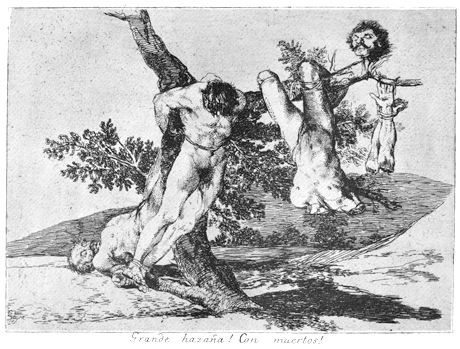
MG: I've had this notion of using characters from other languages as icons on each panel on the LP and digi-pack CD version, and each character from each language would be on each panel. It was going to be “glowing man” or "world" in Japanese, Sanskrit, Hebrew, a few other things, and I just started to look at it and saw how "New–Agey" it looked. It looked like Orientalism or something, and I was appalled—and I said, “fuck it,” and threw it out. There was a deadline. So, instead, I just drew these characters myself. I realized later it sort of looks like The Disasters of War by Goya a little bit—body parts hanging from the trees. I also saw a parallel afterwards to Bruce Nauman, who’s a great conceptual artist and sculptor, who made this piece called From Hand to Mouth. It's a sculpture of a cast of a mouth, leading down to an arm. It’s just that—not the rest of his body. It’s kind of a wonderful piece. The cover art is up for interpretation.


The Glowing Man

SD: Swans are sometimes associated with the no-wave scene that was going on in the 1980's. Can you tell me a little more about what was going on for you then?


MG: We came at the tail-end of it. We jettisoned onto the tail-end of punk and no- wave. Oh, that’s only a minor historical point; the groups that were associated with no wave (if I can fucking remember them right now) are Mars, Teenage Jesus, The Contortions, Theoretical Girls. Oh god, they were pretty much all disbanded by the time both I and my friends from Sonic Youth got to New York or formed a band. We kind of came out of that period. Certainly both of us informed on the aesthetic of no wave. I didn't want to sound like someone else. I just was emboldened by the idea of not really playing your instrument in any conventional sense—I certainly couldn't at the time—but still forging something. I was more inclined towards very regimented rhythms, like most of the no -wave stuff would have been, with the exception of The Contortions. It was a gate that opened up just to move forward.


SD: You were reacting to the punk scene.


MG: Yeah, punk at that time, by 1980, was just a total cliché already. The attitude of punk, the emotion—violent emotion—was really attractive to me. But the idea of playing the chord progressions was just kind of stupid to me, so I never did that. Punk had a uniform and hardcore was even worse. It was like a bunch of high school jocks that found their soundtrack, you know? To me, it was not very interesting.


SD: Speaking about violence, per se, it's rumored back in the day that you would lock the people into the show, and you were also noted to turn the A/C off while playing live. What’s the story behind this?


MG: Well, we got tired of people fleeing [laughs]. People hadn't heard anything like it before, so it was definitely a sort of undeniable presence in the room. So, I guess, a couple times we locked the doors and we turned off the lights, so it was completely dark (laughing again). Listening to Swans is a commitment. That wasn't a habitual thing. The A/C just really has to do with my voice. When the A/C fans are blowing on the stage, your vocal chords instantly freeze up. Plus, I also feel like I'm in a bank or something. I was heartened to read that Aretha Franklin has the same requirement—she needed to turn off the A/C on stage. Not that I’m Aretha Franklin; although I wish I was. Yeah, I don't mind the heat. It can be very extreme at times, where you almost pass out, but it kind of adds to the whole feel of what’s going on I guess. It's not supposed to be nefarious or about some sadistic attitude towards the crowd. It’s simply just a by product of wanting my voice to work. I quite enjoy the sweating and the expulsion.

SD: I can’t wait to see the San Francisco show- for me, I would imagine it would be like this sweat lodge, being ritually cleansed, or exorcised. Maybe that's what you're doing to the audience.


MG: Yes, I feel like it is. But, it’s also happening to us, too. Yeah, maybe I think all those kinds of descriptions are somewhat accurate, but they're a bit romantic. It’s just a job really. HAHAHAH! [totally cracks up]. It’s like working in construction.


SD: I know in your musical career, you have had hard times. Have you felt like, "Fuck music! Fuck being an artist! I'm just going to be a fucking banker, or a real estate agent?"


MG: Ha! I guess I would have been a lawyer. No, I don’t even have a choice. This is who I am, this is what I do. This is what I have known. I'm an artist—and it's not with a capital “A”—it’s just what I have to do. It's through digital means, it's through writing. It’s through music that I feel like, “I have to do that,” or I feel like I’m not actually existing. Finding your calling is a primary realization. So, that’s just how it is.


SD: Especially the stuff you're putting out. It can't be avoided. It’s almost at this point borderline mysticism—spiritual in a sense.


MG: There’s a lot of spiritual aspirations involved, but again, I wouldn't want to overemphasize that. It’s rock music, for god’s sake! I would suggest people should experience it, and if they like it, “fine,” and if they don’t, “bye.”


SD:Take it or leave it; this is what I do?


MG: There’s always been that attitude. There was a time in the late 80s that the lure of success—so-called success—put us on a major label and I made some compromises which I thoroughly regret. But in my defense, I did it out of an intense fear of continuing to work construction for the rest of my life. It’s just a trade-off. I mean, there are great commercial bands (i.e., The Beatles, The Rolling Stones). I realized, after that experience—“that’s not me, I can’t do it”—and I went back to following imagination and intuition, and let the consequences fall where they may.~~


Swans plan to tour for at least another year and half with this crew. Where will they go after this? Gira speculates " this band as we know it now will not continue to exist. After this tour it will be a revolving cast of contributors. Some of them will be the same. Some of them will won't be. We can't have a set band. Not logistically, financially, emotionally. I will not go back to that mode. It is necessary to change it up".~ 

If you want to continue on this ride with Swans and their organic un-foldings follow them here. Also check out there show on 9/3 at the The Regency Ballroom with Baby Dee. Get sonically pummeled. Let it take you there.


Special thanks to Todd Billeci over at noiseart.org and Jeanne Billeci and Charlemagne Charmaine. For your selfless support, spirit, connections and passions.

Reference 1 -Young God Records